
Red light therapy: what does the science say?
Discover the research on red light and near infrared therapy (photobiomodulation), based on peer reviewed studies. For each topic we collect the key studies with a direct link to the source.
Red light therapy is quickly gaining popularity, but what is actually known about it? On this page Luxyor brings together the available research by theme, from skin and pain to sleep, recovery and circulation. That way you can make an informed choice yourself.
- Peer reviewed research
- 13 topics
- Transparent sources
- Red light and near infrared
Red light therapy is a form of support and not a replacement for medical care. The studies listed look at possible effects; outcomes differ per study, dose and person. If you have health complaints, always consult a doctor or specialist.
What research shows
Some outcomes from clinical research on red light and near infrared therapy. Click through to the original study.
Results may vary from person to person.
See all topicsHow does red light therapy work?
Exactly how red and near infrared light work has not yet been settled. The common model is about light being absorbed in the mitochondria. That model is a hypothesis and is being questioned within the field itself. The studies below are almost all laboratory research on cells.
Please note when reading: by far most of the studies below were done with laser equipment in a clinic, not with an LED panel at home. That is why each source states what kind of light and what setup it involved. The full assessment of this research is in our article what the research really says.
See the research (3)
-
Laboratory research links red and near infrared light to more ATP in the mitochondria.View source
-
A review on sport describes that light can trigger mitochondrial processes and cell repair.View source
-
Review research links light to changes in immune and inflammatory processes in cells.View source
Red light therapy and muscle and joint pain
On pain, the research is extensive but contradictory. There are meta analyses with a favourable result and meta analyses that found no difference at all compared with a sham treatment. The British NICE guideline and the Dutch physiotherapy guideline advise against laser therapy for osteoarthritis and neck pain respectively, due to insufficient evidence. So we make no claims here about treating complaints.
Please note when reading: by far most of the studies below were done with laser equipment in a clinic, not with an LED panel at home. That is why each source states what kind of light and what setup it involved. The full assessment of this research is in our article what the research really says.
See the studies (9)
-
In small studies, light is linked to less muscle soreness and faster recovery of strength after exercise.View source
-
With laser treatment in a clinic, a small study saw less pain and more grip strength in tennis elbow.View source
-
A meta analysis from 2009 links laser treatment in a clinic to less neck pain.View source
-
A network meta analysis found, with low certainty, less knee pain after laser treatment. Function did not improve.View source
-
A review mentions around 32 per cent less pain with laser treatment, but did not pool the figures.View source
-
A review of 17 studies links light therapy in the clinic to less pain in fibromyalgia.View source
-
In 160 women with fibromyalgia, light helped mainly in combination with exercise therapy, measured by pain threshold.View source
-
A small study compared two forms of laser on trigger points in the neck. There was no placebo group.View source
-
In 72 people, a device combining light and a magnetic field in a clinic gave short term relief of neck and shoulder pain.View source
Red light therapy for skin and anti ageing
For skin, red light is one of the best studied uses. The effects found are small, though, the studies short, and some were paid for by device manufacturers. In the best blinded study so far, the effect on the clinical wrinkle scale disappeared.
Please note when reading: by far most of the studies below were done with laser equipment in a clinic, not with an LED panel at home. That is why each source states what kind of light and what setup it involved. The full assessment of this research is in our article what the research really says.
See the studies (8)
-
A conference abstract reports more collagen production in skin tissue after red and infrared light.View source
-
In a study of 137 women, wrinkle volume around the eyes decreased by about 30 per cent, without a control group.View source
-
A small study without a control group saw smoother skin after three months of home use of an LED mask.View source
-
A study paid for by the manufacturer, using broadband lamps, saw smoother skin and more collagen on ultrasound.View source
-
A review links light therapy to less inflammation and faster wound healing.View source
-
Research links red and blue LED light to slight improvement of psoriasis patches.View source
-
A review of LED light in skin care found the largest measured effect in acne. For other skin complaints the outcomes varied more widely.View source
-
In a split face study with 76 people, fewer wrinkles were seen after LED light of 633 and 830 nm.View source
Red light therapy for sleep quality and recovery
There is little hard evidence on red light and sleep. The studies are small, often only measure what people experience themselves, and where things were measured objectively there was usually no difference compared with a sham device. Research on daylight lamps with bright white light is something else and is deliberately not included here.
Please note when reading: by far most of the studies below were done with laser equipment in a clinic, not with an LED panel at home. That is why each source states what kind of light and what setup it involved. The full assessment of this research is in our article what the research really says.
See the studies (5)
-
Overview of 17 small human studies on light to the head, focused on sleep and alertness. The authors call the evidence preliminary.View source
-
In a small study, participants felt they slept better. The measurements showed no difference.View source
-
Only at the highest dose and only in winter did participants report a better mood.View source
-
A discussion paper suggests that light supports the clearance of waste products in the brain. Mainly animal research.View source
-
In a small study among nurses, sleep complaints and tension decreased after LED light of 660 and 850 nm.View source
Red light therapy for sports performance and faster recovery
Sport is a well researched area with small effects and weak evidence. The largest summary, with 39 studies and 861 participants, itself speaks of very low to moderate quality evidence. There are also clear null results, and a meta analysis from 2024 found no effect in recreationally active people.
Please note when reading: by far most of the studies below were done with laser equipment in a clinic, not with an LED panel at home. That is why each source states what kind of light and what setup it involved. The full assessment of this research is in our article what the research really says.
See the studies (8)
-
In studies, light before exercise was associated with slightly better recovery of strength, but not in active people.View source
-
At 630 nm there was slightly more jumping power, at 940 nm a lower muscle damage marker. The effects differed per wavelength.View source
-
Research links light to slightly less muscle soreness after 72 hours. Other research finds no effect.View source
-
In studies with low certainty of evidence, light beforehand was associated with less muscle soreness after exercise. Electrical stimulation and compression massage did not show that effect.View source
-
In ball sport athletes, the number of repetitions increased after laser light. There was no effect on maximum strength.View source
-
Overview of 12 systematic reviews with 108 studies in athletes. The authors rate the evidence quality of the underlying studies as low.View source
-
A review from 2016 links light to lower inflammation markers in muscle tissue.View source
-
In research on healthy people, both trained and untrained, the outcomes vary widely and the authors call the evidence weak.View source
Red light therapy and inflammation
Most research on inflammatory processes is laboratory research on cells and animals. That shows what can happen, not what happens in you. Clinical outcomes vary and the evidence is of low quality.
Please note when reading: by far most of the studies below were done with laser equipment in a clinic, not with an LED panel at home. That is why each source states what kind of light and what setup it involved. The full assessment of this research is in our article what the research really says.
See the studies (7)
-
Laboratory research describes how red and infrared light can influence inflammatory processes in cells.View source
-
A review discusses light in tissue repair. The authors say the studies are still too inconsistent.View source
-
In knee osteoarthritis, laser light of 904 to 905 nm gave less pain. There was no effect on function and stiffness.View source
-
An overview of sports studies mentions lower inflammation and damage markers. It is not a meta analysis.View source
-
This review found the largest measured effect of LED in acne. For wound healing and eczema the studies differed too much to pool.View source
-
In fibromyalgia, studies reported less pain and better function. The design of those studies varies widely.View source
-
A review describes how light can influence immune cells, mainly in laboratory research.View source
Red light therapy for hair loss and hair growth
For hair loss there are relatively many double blind studies with home devices, but almost all with laser combs and helmets, not with panels. The studies are small, rarely run longer than 26 weeks and are often paid for by the manufacturer. In the Cochrane review on hair loss in women, participants themselves saw no difference compared with a sham device, while the researchers did count more hairs. Luxyor does not sell hair growth devices.
Please note when reading: by far most of the studies below were done with laser equipment in a clinic, not with an LED panel at home. That is why each source states what kind of light and what setup it involved. The full assessment of this research is in our article what the research really says.
See the studies (6)
-
In a small study with a laser helmet, hair density increased compared with a sham device. The group was small and there was no long term follow up.View source
-
A review of home devices for hair growth found only 7 double blind studies. In those, hair density increased compared with a sham device.View source
-
A meta analysis of laser devices for hair loss showed more hair density than a sham device.View source
-
A review discusses 15 studies in which laser light appeared to stimulate hair growth.View source
-
Better blood flow via nitric oxide is an explanation researchers propose, not something that has been measured.View source
-
This review found only 7 randomised studies on light for hair loss. All articles reported a positive effect.View source
Red light therapy for acne and blemished skin
For acne, most of the evidence is for blue light, not red. The Cochrane review on light therapy for acne, with 71 studies and 4211 participants, concludes that high quality evidence is lacking.
Please note when reading: by far most of the studies below were done with laser equipment in a clinic, not with an LED panel at home. That is why each source states what kind of light and what setup it involved. The full assessment of this research is in our article what the research really says.
See the studies (4)
-
In a small study with a blue and red LED device for home use, the number of acne spots decreased after 12 weeks.View source
-
A review of LED in skin care reports few side effects. For acne the evidence is moderately strong.View source
-
Reviews describe that red light reaches deeper into the skin than blue light. This comes from models.View source
-
Blue light acts on bacteria via porphyrins. For red light, the review describes an anti inflammatory effect.View source
Red light therapy for relaxation and energy
Under this heading are very diverse studies, from laboratory research to small studies in patients. Some of it is animal research. There is no evidence that a red light panel makes you more energetic.
Please note when reading: by far most of the studies below were done with laser equipment in a clinic, not with an LED panel at home. That is why each source states what kind of light and what setup it involved. The full assessment of this research is in our article what the research really says.
See the studies (5)
-
Laboratory research shows that red and near infrared light is absorbed by mitochondria.View source
-
In 60 patients in intensive care, a study with LED light saw muscle strength and mobility increase.View source
-
A review found less fatigue in fibromyalgia. The certainty of evidence is moderate, not high.View source
-
Research in humans shows that light to the head can influence blood flow in the brain.View source
-
In a study with mice under stress, cortisol dropped after light of 810 nm. Not studied in humans.View source
Red light therapy and lower back pain
For lower back pain the evidence is divided. There are meta analyses that find less pain in the short term, but a large blinded study with 148 patients found no clinically relevant difference at all compared with placebo, and the Cochrane review concludes that there is insufficient data.
Please note when reading: by far most of the studies below were done with laser equipment in a clinic, not with an LED panel at home. That is why each source states what kind of light and what setup it involved. The full assessment of this research is in our article what the research really says.
See the studies (7)
-
A small study with 34 people and laser of 808 nm saw less back pain after 3 months. The sham treatment also helped. Both groups also received an anti inflammatory drug.View source
-
A meta analysis of laser studies saw less back pain in the short term, especially at a higher dose per point.View source
-
A meta analysis of 7 laser studies saw less pain, but no difference in disability or mobility.View source
-
Overview of 11 studies on pain and inflammation in general. In 9 studies chronic pain decreased; little was measured on inflammation.View source
-
A review of laser studies saw less back pain. An effect on mobility has not been clearly shown.View source
-
A study in 100 women saw less back pain after laser, but also after ultrasound. There was no sham treatment.View source
-
An older study on back pain saw a better result when laser light was combined with exercises.View source
Red light therapy for blood flow and circulation
On blood flow, the research is mainly about the assumed mechanism via nitric oxide. Some of the studies are animal research. In the only human study below, about half of the participants did not respond.
Please note when reading: by far most of the studies below were done with laser equipment in a clinic, not with an LED panel at home. That is why each source states what kind of light and what setup it involved. The full assessment of this research is in our article what the research really says.
See the studies (4)
-
Small study in 20 people: skin blood flow increased in only some of them after near infrared light.View source
-
A review describes how light can influence nitric oxide. This is theory, not evidence.View source
-
In mice, red light of 670 nm caused wider blood vessels. This has not been shown in humans.View source
-
A review of the possible effects of light on the heart and blood vessels. Mainly theory, not evidence.View source
Safe use & practical tips
Red light therapy is generally safe and well tolerated, but you get the most out of it with the right routine. A few practical guidelines:
- Distance: with panels, usually keep 15 to 30 cm; always follow the manual for your model.
- Duration: 10 to 20 minutes per zone is usual; longer is not automatically better.
- Frequency: a few times a week over several weeks; regularity matters more than a single long session.
- Eyes: use the supplied or recommended eye protection, especially with near infrared light.
- Skin: use on clean, uncovered skin without sunscreen or covering creams.
- Check first: are you pregnant, do you take light sensitive medication or do you have a medical condition? Then talk to a doctor first.
Our red light panels
-
Luxyor Lumi 700 White Full Body Red Light Therapy Panel with 7 Wavelengths and Touchscreen
Regular price €1.149,95 EURRegular priceUnit price per -
Luxyor Lumi 700 Black, Full Body Red Light Therapy Panel with 7 Wavelengths and Touchscreen
Regular price €1.149,95 EURRegular priceUnit price per -
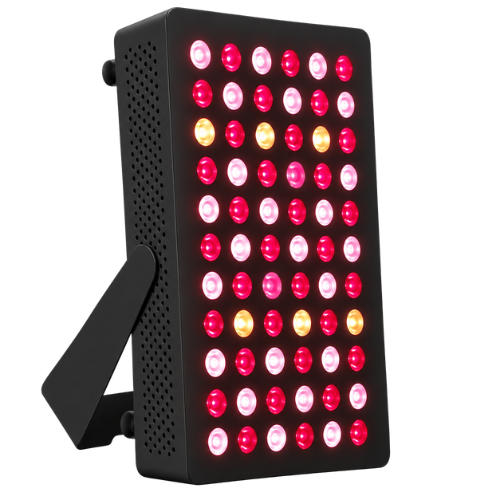
Luxyor Lumi 110 Black, Red Light Therapy Panel with 7 Wavelengths and Touchscreen
Regular price €349,95 EURRegular priceUnit price per -
Luxyor Lumi 110, Red Light Therapy Panel with 7 Wavelengths and Touchscreen
Regular price €349,95 EURRegular priceUnit price per




Every batch is tested externally
We have every production batch of our panels and lamps tested externally for safety, performance and durability. From electrical safety to contact temperature and continuous use, we share the results openly and honestly.
See for yourself what we test and what the results are.
Frequently asked questions about red light therapy
The key questions, answered briefly.
What exactly is red light therapy?
Red light therapy (also called photobiomodulation or LLLT) is the targeted exposure of skin or tissue to red and/or near infrared light at specific wavelengths. The light is absorbed by the cells and can in this way support natural processes, such as energy production in the cell.
What is the difference between red light and near infrared?
Red light (about 630 to 660 nm) is visible and works mainly at the level of the skin, think of collagen and skin improvement. Near infrared (about 810 to 940 nm) is invisible and penetrates deeper, into muscles and joints. Many Luxyor panels combine both.
How long does a session last and at what distance?
Sessions usually last 10 to 20 minutes per zone. For panels, a distance of about 15 to 30 cm is often used. Always follow the manual for your specific device, because the ideal use differs per model and wavelength.
How often should I use it to see results?
Many studies use sessions a few times a week over several weeks. Regularity matters more than a single long session. Results build up gradually and differ per person and goal.
Is red light therapy safe?
In research, red light and near infrared therapy are generally described as safe and well tolerated, without UV radiation. Do wear the supplied or recommended eye protection and use the devices according to the instructions. If you are unsure because of medication or a condition (for example light sensitivity), talk to a doctor.
Does red light therapy replace medical treatment?
No. The information on this page is meant to inform you about available research and is not medical advice. Red light therapy is a form of support and not a replacement for diagnosis or treatment by a doctor. If you have complaints, always consult a professional.
How to read these sources
Every statement on this page links to the original publication, so you can check everything yourself. We have reviewed every source on this page ourselves and adjusted the texts where they were stronger than the study behind them. Sources that turned out not to be about the topic they were cited for have been removed.
Three things to keep in mind. First, by far most research was done with laser equipment in a clinic, not with an LED panel at home. Second, a large part is laboratory research on cells or animals. Third, the quality of evidence in this field is low across the board: an umbrella review from 2025 of 204 randomised studies found high certainty of evidence for not a single outcome.
The full assessment per application, with all sources, is in the article red light therapy: what the research really says. Similar articles exist for the two other devices, on the infrared lamp and on the infrared sauna and the sauna blanket.
This knowledge base informs you about available research and is not medical advice. Red light therapy does not treat conditions and does not replace care from a doctor. Do you have complaints, are you pregnant or do you take medication? Then talk to your doctor first.
See our red light panels
-
Luxyor Lumi 700 White Full Body Red Light Therapy Panel with 7 Wavelengths and Touchscreen
Regular price €1.149,95 EURRegular priceUnit price per -
Luxyor Lumi 700 Black, Full Body Red Light Therapy Panel with 7 Wavelengths and Touchscreen
Regular price €1.149,95 EURRegular priceUnit price per -
Luxyor Lumi 110 Black, Red Light Therapy Panel with 7 Wavelengths and Touchscreen
Regular price €349,95 EURRegular priceUnit price per -
Luxyor Lumi 110, Red Light Therapy Panel with 7 Wavelengths and Touchscreen
Regular price €349,95 EURRegular priceUnit price per
